All organizations, institutions, enterprises, expeditions — even religions and movements — begin at some specific moment, though their development may take many different courses. They can be carefully reasoned into existence, they can spring spontaneously to life, or they can slowly evolve as an idea, then gestate and emerge in stages like a butterfly. The origin of the Foundation for Deep Ecology has taken the latter course, and the organization is still very much evolving today, changing its form and even its goals and aspirations.
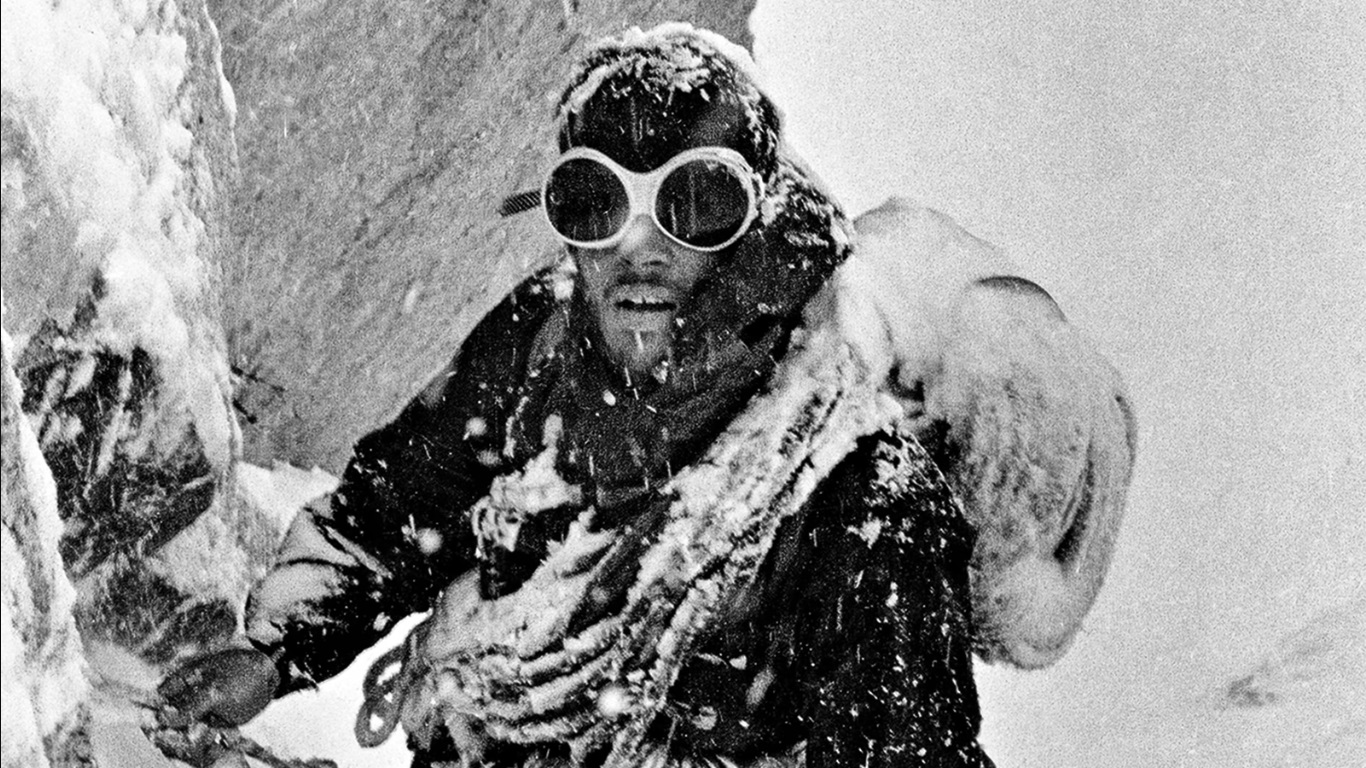
As far back as 1985, my hopes and expectations in life began to shift. The excitement and involvement that came with building Esprit, improving the craft of image making, marketing, organizing, and growing a complex, multinational operation, began to lose their luster. Although I’d considered myself an environmentalist since I was barely a teenager, I had never seriously thought about environmentalism as a worldview. I had been wilderness-oriented, an avid mountaineer, and I had traveled all over the world on expeditions to the great mountain ranges. At times my entire life was dedicated to climbing. Wild nature was my passion. I spent months every year in the mountains of Patagonia, Russia, Europe, Antarctica, Alaska, Canada, and the western United States. I felt best when sleeping under the stars, in forests, on high vertical walls, on glaciers, or along great steep ravines. I took to wild-water kayaking when climbing wasn’t in the offing. Being out in wild nature was in my veins, but I had little intellectual understanding of the driving forces of nature, culture, and the biodiversity/extinction phenomenon — let alone the epistemological basis of the worldview underlying those forces that directed society into the crisis we were all discovering.
My “environmentalism” was an outgrowth of my involvement in the anti-war/civil rights movement of the 1960s and the so-called greening of America movement that became intertwined with those social movements. I had also become distracted by a successful business. I still wonder how I could have been so focused elsewhere that I was not out there with the Earth First!ers, where my heart actually longed to be. I had become fascinated by marketing and image making, and as I look back on it now, I wonder what I was really thinking about, what captivated me so. I think that in a way this ability to become narrowly focused is as fundamental a root cause of the eco-social crisis as one can find. One loses sight of the greater reality, living in that microcosmic world of marketing, advertising and global distribution. Somehow I missed the cues provided by Jerry Mander, my shadow teacher, in his book Four Arguments for the Elimination of Television, along with those in other books I read in the 1970s, such as Ted Roszak’s Where the Wasteland Ends and Wendell Berry’s The Unsettling of America.
All of that changed upon reading George Sessions’s and Bill Devall’s primer, Deep Ecology: Living As if Nature Mattered. Even though that book, which I recommend to everyone, was written rather hastily, it clearly put the issue of worldviews into perspective for me. Within the few hours that it took to read the book, I experienced a powerful epiphany. Everything suddenly made sense. The book offered a new vision of how things got the way they were. It combined the activism of David Brower, my environmental hero, with the insight of Robinson Jeffers, my poet hero. Gary Snyder’s Four Changes, which I must have read half asleep, finally took on its real meaning. I never put Deep Ecology down until I’d copied enough reference titles for further reading. The clincher of this amazing personal discovery was realizing that Arne Naess — an author whose background I hadn’t known about but whose short essay on the “conquering of mountains” had been posted for years on my office bulletin board — was the person who coined the phrase “deep ecology.” Too many mountaineers were involved in the thinking end of this radical branch of environmental philosophy for it not to be on the mark! I was on my way toward a reeducation. I suppose it was logical, given my love affair with mountaineering and adventuring in the wilderness, and even my shallow ecological activism of the sixties and seventies, that the influences of Arne Naess, John Muir, Paul Shepard, David Ehrenfeld, Henry David Thoreau, Aldo Leopold, and eventually, Sigmund Kvaloy, Edward Abbey, Alan Drengson, Charlene Spretnak, Vandana Shiva, and many others, put me so firmly on a “deep” ecological path. All these writers, thinkers and philosophers were fundamentally biocentric in outlook, and that was where the dividing line seemed to be. I had always been proud to quote Mark Twain’s famous line of not letting your schooling get in the way of your education, and yet I devoured book after book in the next few years, doing my unfinished homework and scholarship some twenty years late. Meanwhile, my zeal for business began to fade away. I had realized that the production and promotion of consumer products not vital to anyone’s needs were as much a part of the eco-social crisis as anything. I was, simply, contributing to the problem itself. I had to do something else. I had to figure out how to get on the solution side of things.
In 1988 I had definitely decided (to myself) that I would try to sell my shares in the business, and I began talks with an old friend, Jerry Mander, about how I could start a type of thinktank or organization that would concentrate on the environmental crisis. The power of ideas, the value of philosophical circles, and the need for systemic analyses and critiques of the existing worldview became part of our discussions. By that time I had been poking my head into the Public Media Center (PMC) in San Francisco, where Jerry was a senior fellow and one of the guiding intellectual lights, along with Herbert Chao Gunther. PMC has produced hundreds of social and environmental advertisements, which are well known throughout the world and are some of the most effective activist statements ever created. I began to understand the structure of eco-social activism as I got involved in all sorts of things there. Under the direction of Gunther, PMC had become a hub of radical activities, and I began helping them and some of their non-profit clients. By then I was quietly awaiting my chance to exit the business world with as much capital as possible to form a foundation. That opportunity materialized in early 1990, and with Jerry’s help, we formed the Foundation for New Paradigm Thinking, which, upon more careful reflection, we renamed Ira-Hiti, Foundation for Deep Ecology, which later became simply Foundation for Deep Ecology. I channeled the largest tax-free charitable contribution the IRS would allow directly to the new Foundation. Since that time, contributions of other personal assets have allowed the Foundation’s resources to grow to almost $170 million. We have proudly granted more than $30 million to environmental organizations all over the world, and our future projections suggest that we will be able to contribute perhaps twice that amount over the next ten years. In addition, we have granted $12 million for land preservation projects primarily in Chile and Argentina.
Throughout these first ten years, our orientation, focus, and vision have been constantly evolving. We have, however, consistently attempted to favor eco-centric thinking and activism, deep systemic analyses, focuses on root causes of problems, and structural changes in place of mere reforms. Our desire to be at the leading edge of each area we grant in has generally drawn us toward the vanguard of radical thinker/activists whose ideas are ahead of their time. Such visionaries invariably bring with them an in-depth critique of techno-industrial society and the worldviews driving the destruction of nature and cultures. They usually spearhead or work within small organizations, which very often come from the grassroots, and are not yet well supported by mainstream foundations. We believe that they represent intelligent and eco-socially appropriate solutions for what we hope will be a truly sustainable, green society of the future.
Today, after our first decade of concerted effort, I feel we have finally joined the leading ranks of environmental grant makers-modestly at the beginning, but now with a fair measure of experience and maturity. We hope we can continue to grow in stature, earn respect among fellow foundations, and take a leadership role in the areas where we have built up expertise.
We are hopeful, despite the overbearing weight of negative evidence, that the ecological crisis, most especially the extinction crisis, may be quelled and that natural evolutionary processes may one day resume. We soberly acknowledge that it will take the collective effort of all humanity to reverse the environmental crisis and its attendant cultural crisis. Bearing witness (and using our foundation’s resources to often do more than bear witness) is a strategy calculated to help future activists and future generations remain energized and active. In the face of escalating pollution, accelerating rates of deforestation, atmospheric alterations, and new technological threats ad infinitum, maintaining psychological and emotional equilibrium becomes as important as anything. It is with this spirit, vision, and approach that we embrace all of our work. We carry this perspective forward as our second decade begins.
Doug Tompkins
Leave a Reply